
Trace Former Owners of a Manassas Park Property
Start at the end of the chain. The newest recorded deed names the current owner of record. Its grantor becomes your next target. Find that person as the grantee on an earlier instrument. Repeat the step until the chain thins out. The City parcel record helps here. It supplies the parcel number plus a deed book and page lead. From there, the Prince William Circuit Court Clerk's land books take over. They hold deeds, deeds of trust, releases, liens, easements, and plats. The online index publishes no confirmed first year. Ask the Clerk about its date range before assuming an empty result means the chain ends.
| Source | Years It Covers | Where Held | What It Shows |
|---|---|---|---|
| Keystone deed search | Online start year not stated | City public portal | Parcel, current owner and book/page results |
| SRA/COVERS index | Manassas Park cutoff not confirmed | Virginia court service | Index access; images may require subscription |
| Older deed books / microfilm | Ask the Clerk for the relevant period | Prince William Circuit Court land records | Earlier recorded instruments |
| Library of Virginia catalog | Collection dates vary by record series | State archive | Finding aids and broader historical context |
Match the tool to the age of the transfer. A recent sale needs only the city parcel key and its deed reference. An older chain may live in a paper land book or on microfilm. The Clerk can tell you where each volume sits. The Library of Virginia offers archival aids worth consulting. But the circuit deed remains the record that counts. Coverage differs across these sources. No portal states a complete online cutoff for Manassas Park.
Manassas Park Deed Index Coverage Has No Confirmed Start
Keystone and SRA materials describe how to reach Manassas Park instruments. Yet neither states the first searchable year. That gap matters for a chain search. A missing hit could mean the date falls outside the portal. It could also mean a name is spelled differently, or the parcel reference changed. Sometimes the index entry simply needs a clerk's help.
Anchor on the deed you already have. Its book, page, and party names give you a fixed point. Then contact the Land Records Division about earlier volumes rather than guessing a cutoff year. The Clerk's answer decides the next move. It may point to another online query, a paper deed book, or a roll of microfilm.
The Keystone deed search is the local public starting point.
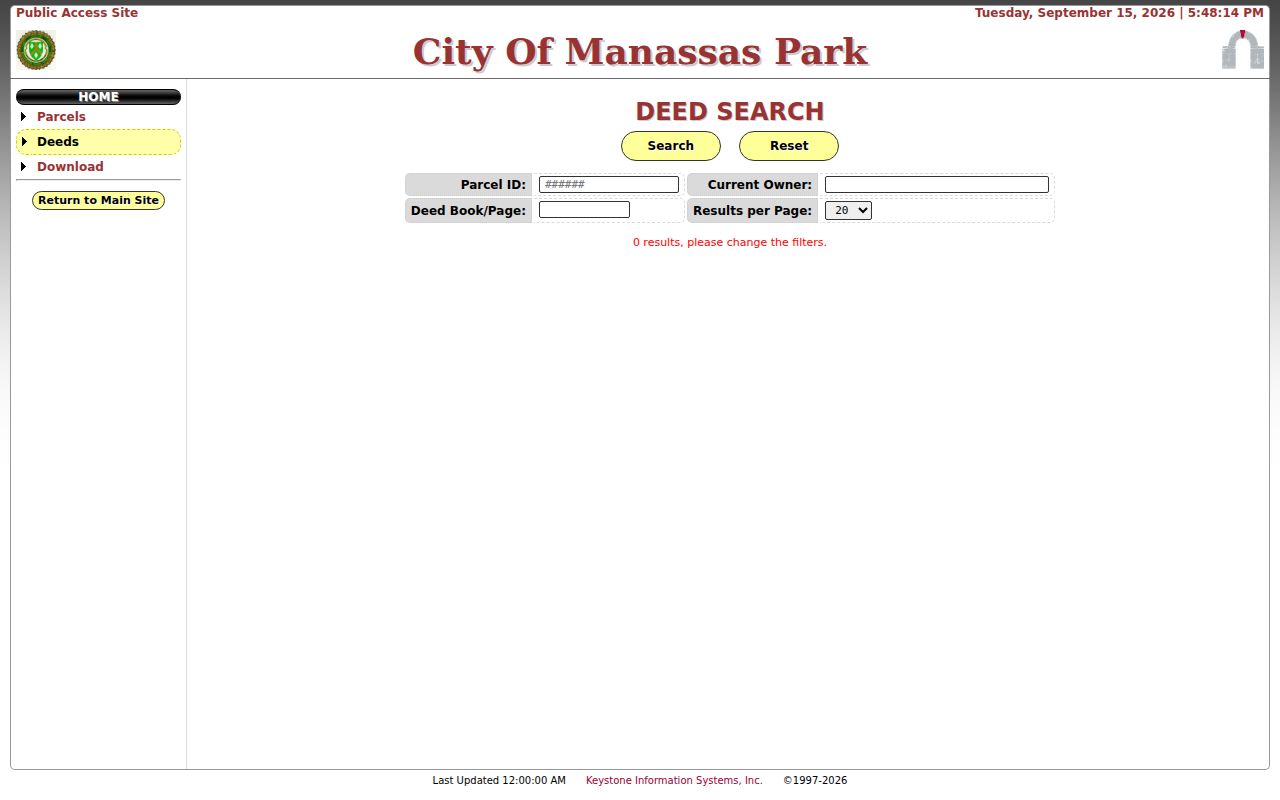
The official form shows its current search fields but publishes no start date for the online index.
SRA Images Support a Manassas Park Ownership Chain
Virginia SRA/COVERS may allow free index-only access where enabled. Full images are another matter. They require the clerk-authorized subscriber process and payment. A former-owner search usually needs the image itself, because the legal description and the signatures separate people with similar names and confirm which land actually changed hands.
An image gate does not stop the inquiry. Ask the Clerk about a counter copy or an older record format, and request a certified copy when your purpose demands one. Keep the book, page, or instrument number beside every transfer in your chain notes.
Read the Virginia SRA access information for the index-image distinction.
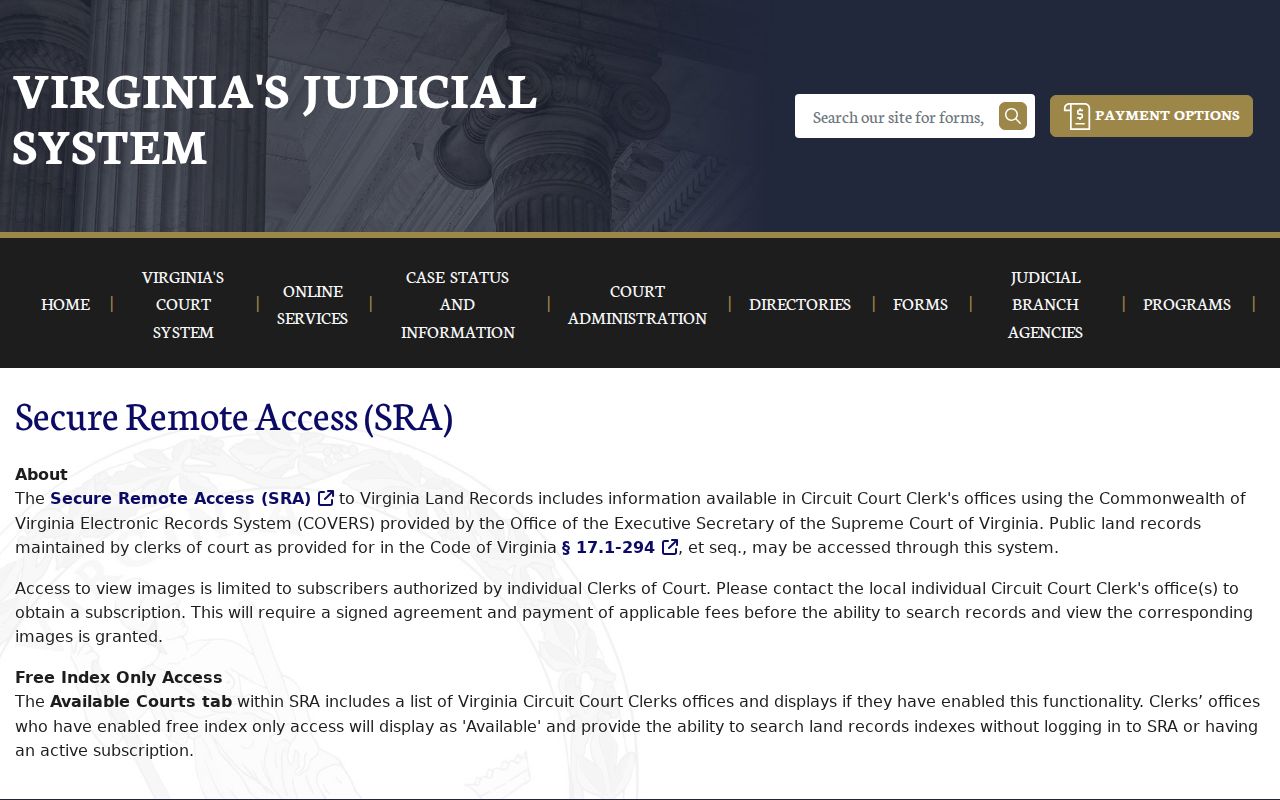
An index result only locates a filing; the image lets you read the instrument itself.
Keep the Manassas Park Legal Description Constant
Names alone can mislead. Step backward through Manassas Park property records. Compare the land description on every deed, not just the grantor and grantee. One instrument may cite a lot and block, another an easement, another a metes-and-bounds parcel. A street address works fine for a current property search. An older instrument may phrase the land entirely differently. Book, page, and the legal description together show that two documents concern the same ground.
Orient with the assessor's Parcel ID and Map/Block/Pin, then read the deed or plat itself. A GIS map can support the comparison. The recorded document remains the source for its legal description. If the description shifts between filings, ask the Clerk or a title professional. They can assess the chain instead of trusting a map outline.
Walk the Manassas Park Deed Chain Backward
Open with the newest deed tied to the parcel, not a broad name search. Each instrument hands you the next earlier party plus a land description to compare. The Prince William court system spans several localities. Keep the city parcel key beside the deed citation at every step. Names change after marriage, an estate transfer, or an entity filing. When that happens, search by parcel and document reference rather than by person.
- Locate the newest deed by parcel or its book/page reference.
- Record the grantee, grantor, date and legal description.
- Search the grantor as grantee on the earlier deed and compare the land description.
- Repeat, then ask the Clerk about deed books or microfilm if the online index ends.
- Grantor
- The party conveying an interest in the instrument.
- Grantee
- The party receiving that interest.
- Chain of title
- The ordered series of recorded transfers for the same land.
- Legal description
- The written land description used in the deed or plat.
Probate Can Interrupt a Manassas Park Name Chain
An estate transfer can break a name trail. The deed may name an executor, administrator, trustee, or beneficiary instead of the prior individual owner. A name-only search then misses the link. Indexing under a fiduciary capacity or an entity hides it further. Hold the parcel description and recording reference constant. Then read the instrument for the authority the signer claims.
The Prince William Circuit Court Clerk maintains the land records. The Clerk also holds wills and related fiduciary filings in one place. When an estate transfer appears to sever the chain, ask the Clerk which record series applies to the gap.
Virginia Archives Add Context to Former Owners
The Library of Virginia offers archival catalogs, finding aids, and records-management resources. Its collections can place a Manassas Park parcel in a wider state history. No Manassas Park deed-book series is named there. The circuit land record remains the recorded conveyance's source.
Vital records can sketch a family timeline. Virginia Code 32.1-271 opens birth records after 100 years. Death, marriage, divorce, and annulment records open after 25. VDH genealogy indexes and Library microfilm carry different year ranges, so check each collection description before relying on a match. These sources add context, never a substitute for the deed itself.
Search the Library of Virginia catalog for historical finding aids.
Archives add context; the Clerk holds the deed.
Genealogy Records Can Clarify a Manassas Park Timeline
Family history can explain why a deed names an executor. It can also show why an earlier owner vanishes from a later transfer. The Virginia Department of Health runs public genealogy indexes. Those indexes differ from certified vital-record copies. Birth records open after 100 years. Death, marriage, divorce, and annulment records open after 25 under the cited statute, with other restrictions and copy rules still in force.
Test a clue in the public index first. The deed settles the title sequence. The VDH genealogy page describes its public index years; an index entry is a pointer, not a certified record, and cannot confirm current private details.
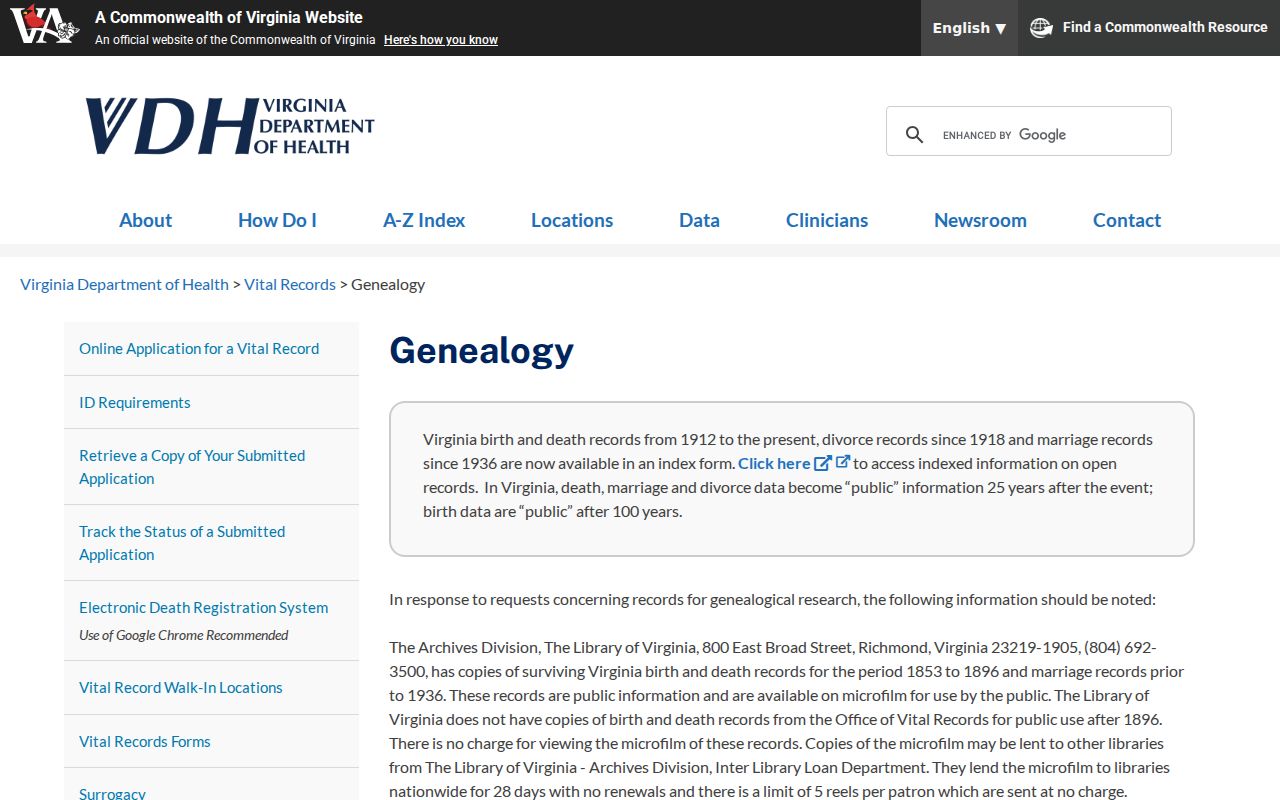
The genealogy index adds family context but does not replace the Clerk's deed books.
How Far Back Manassas Park Ownership Records Reach
The Manassas Park online deed index lists no official start year. No oldest searchable instrument is identified either. Keep that gap visible in any chain history. A search that stops at the portal is a prompt, not proof. Ask the Clerk about older deed books and microfilm. Title rarely begins with the first online result, and the right route depends on the deed date and the book or locality reference.
Virginia's records-retention law adds one safeguard. Public records created before 1912 must be offered to the Library of Virginia before destruction. That rule governs retention and transfer. It does not mean every local deed sits at the Library, so contact the Clerk for land books and use LVA finding aids for archival context.
Lawful use. Trace former Manassas Park owners for house history, property diligence or title preparation. Do not use records to track, harass or intimidate a living person.